
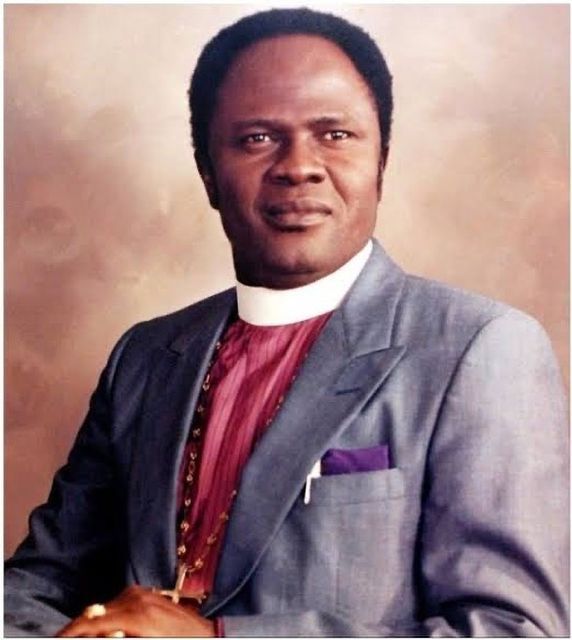



Fasting And Alms Giving by Pastor Dolapo Lawal: MP3 Download & Sermon Notes
Fasting Is Incomplete Without Almsgiving

lightbulb Message Summary - Key Nuggets
- Matthew 6 ties almsgiving, prayer, and fasting together as one practice.
- A real burden differs from someone else's portion or lifestyle want.
- Isaiah 58 defines true fasting as sharing bread, not self-affliction.
- Generosity given quietly tends to return to the giver.
Notes/Excerpt
These notes were taken while listening and may contain some errors. Please tap any sentence twice to suggest corrections.
By holding or selecting a paragraph, you can easily share snippets to friends or on your whatsapp status directly
Matthew 6:1-18, the section of the Sermon on the Mount dealing with almsgiving, prayer, and fasting, ties all three together with the same instruction repeated three times: do it in secret, and the Father who sees in secret will reward it openly. Giving to the needy without announcing it, praying behind a shut door rather than to be seen, and fasting without a disfigured, attention-seeking face are treated as one connected practice, not three separate disciplines. Woven directly into the same passage, right after the model prayer, is forgiveness: "if you forgive men their trespasses, your heavenly Father will also forgive you." Jesus introduces fasting with "when you fast," not "if you fast," which settles the question of whether it belongs in ordinary Christian life. What is less often noticed is that the same passage assumes almsgiving belongs there too, and specifically, that a fast without generosity toward the poor is an incomplete fast.
Burden Versus Portion
Galatians 6:2 says, "Bear ye one another's burdens," while Galatians 6:5 says, "every man shall bear his own burden." Two different Greek words sit behind the same English word: the first, baros, describes a load too heavy for someone to carry alone; the second describes a person's own portion, a responsibility that belongs to them and no one else. A child selling goods around a neighborhood just to raise her own school fees is carrying a baros, a weight that was never meant to be hers in the first place, since that responsibility belonged to her parents. Covering a genuine, disproportionate load like that is bearing someone's burden. A request to fund a lifestyle upgrade, an expensive wardrobe, or a vacation is someone else's portion, not a burden, and confusing the two, whether by the giver or the one asking, misapplies the instruction.
This distinction matters because unchecked giving can do real harm. Someone who is repeatedly enabled rather than genuinely helped tends to stay stuck rather than grow; refusing to keep funding a pattern that is destroying someone is its own form of love, even though it does not feel generous in the moment. Even God's love for his own Son did not spare Jesus the cross, because the cross, not comfort, was what fulfilled his purpose. Balance matters on both ends: give does not mean give without limit or discernment, to the point of neglecting one's own household while chasing a reputation for generosity.
The Fast God Actually Wants
Isaiah 58 confronts people who fasted faithfully and complained that God seemed not to notice. God's answer, in the same breath, is that on the very day of their fast they exploited their workers and quarreled with each other, which explains why the fast accomplished nothing. The fast God describes as acceptable is not self-affliction; it is "to loose the bonds of wickedness, to undo the heavy burdens, to let the oppressed go free... to deal thy bread to the hungry... bring the poor that are cast out to thy house... cover the naked." In other words, whatever food is set aside during a fast should reach someone who genuinely needs to eat, not simply go unused.
The chapter continues that this kind of fast produces real results: "then shall thy light break forth as the morning, and thine health shall spring forth speedily... then shalt thou call, and the Lord shall answer." But the promise is conditioned on something specific: taking away "the yoke... the pointing of the finger, and speaking vanity." Pointing the finger means condemning others; speaking wickedness means repeating what someone shared in confidence, in a moment of trust, as gossip rather than keeping it. That distinction matters: something a person genuinely deserves in response to wrongdoing is not wickedness, it is simply consequence; wickedness is inflicting harm on someone who did not earn it.
Seed and Bread
A recurring biblical pattern distinguishes those who sow seed from those who only ever eat bread. God gives seed to a sower with the expectation that it will be planted, watered, and grown into something that eventually feeds others; the sower becomes the very source someone in need is later led to. A person who only ever positions themselves to receive, never to give, whatever their present lack, forfeits the role of becoming that kind of resource to someone else. Even the widow who gave her last two coins was commended, not corrected, by Jesus, who held her up as an example rather than telling her to keep the money for herself; giving is not reserved only for those who have surplus.
Deuteronomy 15:7-11 instructs against being hard-hearted or tight-fisted toward the poor, explaining that the poor will always be present in the land, which is exactly why the command to share generously never expires. Proverbs 19:17 says whoever is generous to the poor lends to the Lord, who will fully repay what was given. Proverbs 28:27 says whoever gives to the poor will lack nothing. Proverbs 14:21 and 22:9 tie generosity toward the poor directly to blessing, and Proverbs 14:31 says oppressing the poor insults their Maker, while being generous to them honors him.
Give Quietly
None of this is meant to be publicized. Photographing recipients, staging testimonies, or having someone thank a donor publicly turns generosity into performance, and Jesus is explicit that a public reward, likes and comments, is the only reward such giving will receive. Real giving looks smaller and quieter than that: noticing that someone kneeling at the altar has worn-through shoes, discreetly finding out their size, and returning the following week with a new pair, without ever telling anyone what was done. That is the kind of ordinary, unannounced attentiveness the passage is describing. When someone tries to offer thanks for something given this way, redirecting the thanks to God rather than accepting it personally keeps the giver from quietly trading away a reward that was never meant to be collected on earth. The giver is simply the one carrying the gift, not its true source.
Two stories illustrate the same principle from the other direction, how unexpected generosity often returns to the giver. One man in genuine need of ten thousand dollars once received an anonymous check for that exact amount, delivered through someone who had no idea who had written it or why; the point was that the deliverer received no thanks, because thanks belonged to the one who had actually written the check, unseen. Another man, trying urgently to raise twenty million naira for his family's relocation, instead gave away nearly all he had, two hundred thousand naira, to help a friend whose child needed urgent surgery. Within days, a relative he barely knew, moved by an inexplicable dream about their late father, called offering to send him the entire twenty million he needed. Sometimes the shortest distance to receiving what is needed runs directly through releasing what can be spared to help someone else. Whatever posture that giving is done with matters as much as the giving itself; it is meant to be practiced with genuine kindness, not resentment or self-interest dressed up as generosity.
Pastor Dolapo Lawal
Enjoyed this sermon? Browse more messages by Pastor Dolapo Lawal on ReadSermons.
Comments
0 comments
No comments yet. Be the first to share.
Stay updated with Readsermons
To be notified on every sermon release, join the group that suits you best:
For nuggets & Sharable snippets follow us.
headphones Media & Resources
Listen to Sermon
Download initiated! Follow us to be the first to get new sermons by Pastor Dolapo Lawal.
Fasting And Alms Giving
Pastor Dolapo Lawal • 18MB
Download initiated! Follow us to be the first to get new sermons by Pastor Dolapo Lawal.
Your download
is starting! 🎉
Connect with us directly for more powerful teachings.
Fasting And Alms Giving
00:00:00 / 00:00:00