



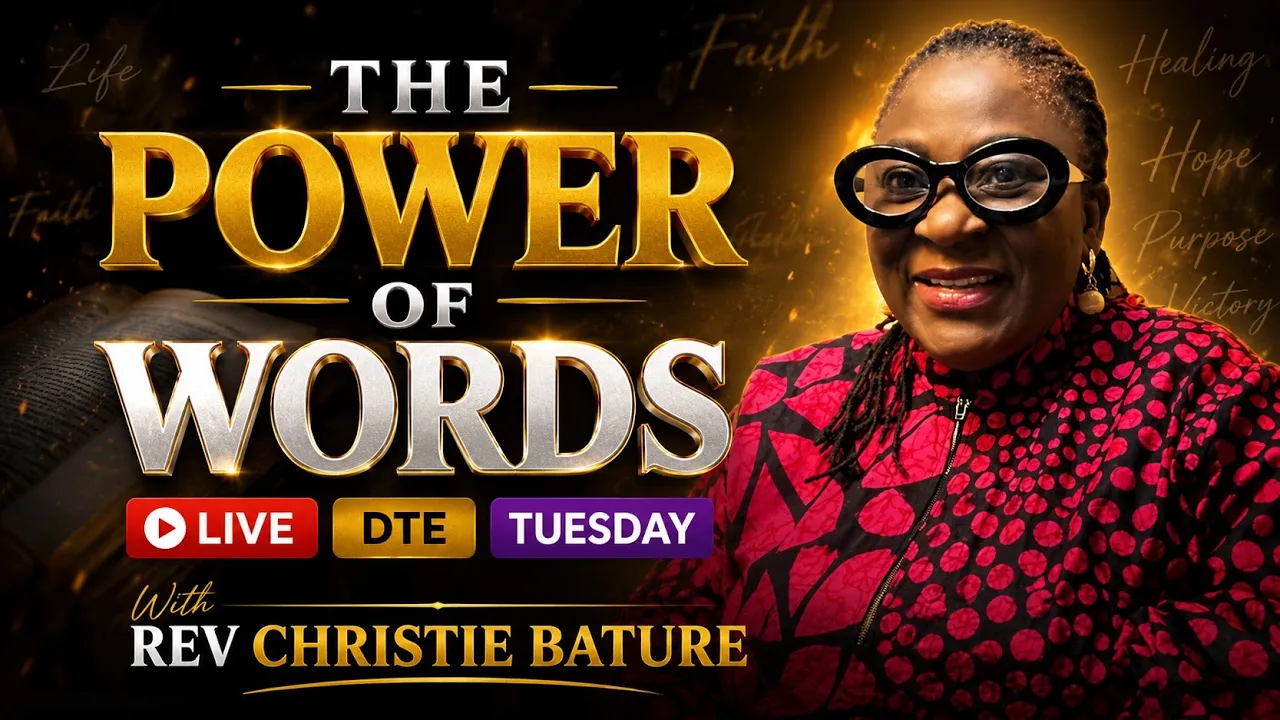
The Power Of Words by Rev. Christie Bature: MP3 Download & Sermon Notes
Words Are Creative Wombs
lightbulb Message Summary - Key Nuggets
- Words physically reshape the brain and body.
- A parent's voice becomes a child's inner voice.
- Science confirms what scripture has always taught about the tongue.
- Truthful self-talk, not empty affirmation, changes outcomes.
Notes/Excerpt
These notes were taken while listening and may contain some errors. Please tap any sentence twice to suggest corrections.
By holding or selecting a paragraph, you can easily share snippets to friends or on your whatsapp status directly
Words Are Creative Wombs
Words are creative crucibles, creative wombs. Before turning to scripture, it is worth asking what science itself says about words, because neuroscience, psychology, medicine, and linguistics all intersect with what the Bible has always taught.
Science does not support the idea that words possess mystical power to alter reality simply by being spoken. However, science overwhelmingly supports the idea that words profoundly influence brains, bodies, relationships, behavior, health outcomes, and ultimately the course of life. In that sense, words are among the most powerful psychological tools human beings possess.
How Words Physically Change the Brain
- Every word heard is processed through several brain regions at once: the amygdala evaluates threat, the prefrontal cortex interprets meaning, and memory centers compare the word against previous experience. Within a fraction of a second, stress or calming hormones are released based on that evaluation.
- Repeated exposure reshapes neural pathways through neuroplasticity. The limbic system bypasses conscious thought and responds from memory, the same way a familiar drive home can happen without conscious attention to the road.
- Children who repeatedly hear "you are stupid" build neural networks around inadequacy, and continue behaving in ways shaped by those words. Children who hear "you are capable, you are intelligent" build networks around confidence and persistence. This is measurable brain wiring, not mere positive thinking.
notifications_active Stay Updated
Join the Readsermons communities for daily nuggets and new sermon alerts.
How Words Affect the Body
Hostile, critical language increases cortisol, adrenaline, blood pressure, and heart rate. The body reacts almost as though it is facing physical danger, simply from hearing negative, critical language. Encouraging words, by contrast, increase feelings of safety and reduce physiological stress responses.
Chronic verbal abuse is linked to increased risk of anxiety, depression, chronic stress, sleep problems, immune dysfunction, and elevated inflammation. Supportive communication is associated with lower stress, better recovery, stronger resilience, improved immune function, and healthier relationships.
The Parent's Voice Becomes the Inner Voice
Children eventually begin speaking to themselves the way significant adults spoke to them. If a parent says a child will never amount to anything, years later the adult child says, "I'll probably fail," and traces it back to what a parent or relative once said. The parent's voice becomes the person's own inner voice.
Whatever your voice is saying to your child today is what their inner voice will be saying to them as an adult.
Words Influence Memory and Expectation
Rev. Christie Bature
Enjoying this sermon? Browse more messages by Rev. Christie Bature on Power Of Words at ReadSermons.
Memory is not a replay of a video; it is reconstructed each time it is remembered, and even changing one verb can influence eyewitness memory. This is why careful language matters, especially with those who are grieving or in pain: sometimes the best way to console someone is simply to sit with them in silence rather than searching for the right words.
Words also change expectations, and expectations change behavior. This is known as the Pygmalion effect. When teachers believe students are gifted, the teachers unconsciously teach differently, wait longer for answers, and give better feedback, and the students often perform better. Expectations become reality through changed behavior.
Words and Mental Health
Cognitive behavioral therapy, one of the most researched psychological treatments, works by helping people identify distorted thoughts and replace them with more accurate ones. Romans 12:2 already said this: renew your mind. Science is catching up to what scripture has always taught.
Changing habitual language can reduce symptoms of depression, anxiety, panic, and stress. Distorted thinking sounds like, "This is how I'll always be," "I don't know what else to do," "I can never be well," "Everybody hates me." The goal is not empty positivity but truthful thinking.
Consider three people who lose their jobs. The first says, "My life is over." The second says, "This is difficult, but I can recover." The third says, "This is an opportunity." The job loss itself does not change, but the words influence emotional state, decision-making, motivation, and persistence, and those differences shape outcomes over time.
Speaking to Yourself
You may also like
Mangu Crusade Day 3
by Apostle Michael Orokpo
The brain often responds to a person's own voice similarly to the way it responds to a trusted person's voice. Repeated self-statements reinforce neural pathways, which is why psychologists encourage replacing distorted thoughts with balanced, evidence-based statements.
- Truthful self-talk works better than unrealistic affirmation. Rather than declaring something you do not believe, say, "I am learning," "I have handled hard things before," or "I can take the next step."
- Build conviction in stages rather than in one unbelievable leap. State where you are, then where you are going, one level at a time.
What Science Does Not Claim
Science does not conclude that speaking wealth automatically creates money, or that saying "I am healthy" cures disease by itself. Declarations alone do not alter physical reality independent of action and circumstance. What science does support is that words influence beliefs, emotions, physiology, behavior, relationships, and decisions, which in turn significantly affect real-world outcomes.
Where Science Meets Scripture
The Bible speaks of the power of the tongue not as magic, but as a force that shapes people and communities.
Proverbs 18:21
Proverbs 12:18
James 3
The tongue is compared to a rudder that steers a ship, and a spark that can set a forest ablaze.
Ephesians 4:29
Encourages speech that builds others up.
Modern science does not verify the theological claims behind these verses, but it does provide compelling evidence that words have measurable effects on the brain, the body, the emotions, the relationships, and the behavior of human beings. Neuroscience describes how words exert influence. Scripture speaks to why words matter and how they should be used.
God's design for our words aligns remarkably with what modern science has discovered. Wise speech is not only spiritually significant, it is biologically and psychologically consequential.
Rev. Christie Bature
Enjoyed this sermon? Browse more messages by Rev. Christie Bature on ReadSermons.
Comments
0 comments
No comments yet. Be the first to share.
Stay updated with Readsermons
To be notified on every sermon release, join the group that suits you best:
For nuggets & Sharable snippets follow us.
headphones Media & Resources
Listen to Sermon
Download initiated! Follow us to be the first to get new sermons by Rev. Christie Bature.
The Power Of Words
Rev. Christie Bature • 19MB
Download initiated! Follow us to be the first to get new sermons by Rev. Christie Bature.
Your download
is starting! 🎉
Connect with us directly for more powerful teachings.
The Power Of Words
00:00:00 / 00:00:00