




What Happens When You Fast? by Pastor Dolapo Lawal: MP3 Download & Sermon Notes
Fast From Food, Feast On Scripture
lightbulb Message Summary - Key Nuggets
- Fasting is more than skipping food, it's feeding on God's word.
- Subduing the flesh in one area builds discipline over every area.
- Scripture reveals fasting as led, for direction, repentance, and mercy.
- Avoiding legalism and antinomianism keeps fasting rooted in grace.
Notes/Excerpt
These notes were taken while listening and may contain some errors. Please tap any sentence twice to suggest corrections.
By holding or selecting a paragraph, you can easily share snippets to friends or on your whatsapp status directly
Fasting is willingly abstaining from food for a set time, in order to humble oneself before the Lord and seek him with undivided attention. The idea of fasting is subduing the flesh to heighten sensitivity to the spirit.
Why Subduing the Flesh Matters
Galatians 5:22-23 lists the fruit of the spirit, and 1 Corinthians 12 lists the gifts of the spirit. The fruit of the spirit is what the Holy Spirit does in us, making his stay in us comfortable; the gifts are what he does through us. Notice Paul uses the singular word "fruit," not "fruits," because love is the root and everything else, joy, peace, patience, goodness, kindness, are all expressions of that one thing. You cannot have love without the rest, because once you receive the Holy Spirit, he does not come in halfway; everything is already complete in you, and you are not praying for these qualities but learning to walk in what you already have.
The works of the flesh in Galatians 5:16 onward come from that same single source: the flesh itself. This means anyone capable of one fleshly sin is capable of others, given the right pressure. A person who can lie under pressure can also steal or commit adultery under the right pressure; being surprised that someone who cheated on a spouse also cheated you in business misses this point entirely. Scripture doesn't tell you to find your own way in the dark; it tells you to walk in the spirit, which is like turning on a light. If you have not learned to subdue your flesh in one area, you cannot break any addiction, because the issue was never the specific habit, whether a soft drink or pornography; the issue is the flesh itself. Once you learn to dominate your flesh in one area, you have a far greater capacity to dominate it in every other area. So fasting is not just abstaining from food; it is a commitment to walking in the spirit rather than remaining a victim of the flesh.
What Fasting Must Involve
Fasting must involve prayer. It is not fasting if you wake up at eleven, say one quick prayer of thanks, and then spend the day watching shows until it's time to break the fast. Fasting must also involve repentance, which is not the same as remorse; repentance means changing your mind, turning to the Lord. And it must involve seeking God's face through his word: reading scripture, going over notes from what you've learned, meditating on scripture. Christian meditation, unlike other kinds, is not about quieting the mind but about depositing something into it, speaking it, not removing thoughts but investing God's word into your mind. Joshua 1:8 says the book of the law shall not depart out of your mouth, so that you observe to do what is written in it; the way you do the word is by saying it. Words produce action. Sometimes making a verbal commitment to someone, telling friends "this is the last time I'll drink," creates the accountability needed to actually follow through, because logic alone, recognizing something is expensive and makes you misbehave, can be enough to build that resolve even before any deep spiritual conviction sets in.
notifications_active Stay Updated
Join the Readsermons communities for daily nuggets and new sermon alerts.
Many in this generation listen to preaching for validation rather than correction, choosing pastors who confirm what they already believe rather than those who challenge them, which is a dangerous place to be. Seeking God is not searching, as though he were hiding from you; a God who wrote sixty-six books clearly wants to be known. Seeking is making inquiry into what you already have.
The Hebrew word for fast, tsum, means to cover the mouth, to abstain, to afflict the soul, to humble oneself. Notice that humility is not listed among the fruit of the spirit; it is a choice you make. The Greek word for fasting in the New Testament carries the same meaning forward unchanged: not eating. During a fast, you are not talking excessively either; people who lie unprovoked usually do it because they want to be funny, because they talk too much, or because they never learn to apologize for it, and talking too much during a fast works against the very discipline you're practicing. Fasting is not only about not eating physical food; it's about feeding on God's word instead, taking in scripture the way Jeremiah described eating the words he received. You fast from food so that you can feast on scripture, speaking it to yourself, because we too easily forget who we are, but the word of God remains sure.
How Fasting Developed Across Scripture
Humbling the Soul Leviticus 16:29-31
This is the first, foundational use of the concept: fasting as humbling the soul before God.
Fasting as Led Exodus 34:28, Matthew 4:1
This is a fast God himself leads someone into. Moses did not plan to spend forty days and nights on the mountain without eating or drinking; he went up for an encounter with God, and the fast happened within that encounter, not as something he undertook to earn it. In the same way, Jesus was led by the Spirit into the wilderness where he fasted forty days and was tempted. He did not fast in order to have an encounter; he fasted within one.
Seeking Direction in a Crisis Judges 20:26
This is the first explicit use of the word fasting in scripture, tied to Israel weeping, fasting, and offering sacrifices after suffering defeat, desperately asking the Lord what to do next. When you are genuinely torn between options and fasting for direction but not hearing a clear word, the answer is to take an intelligent action; spirituality is not a suspension of common sense. Like setting a destination on a GPS, you are not considered "led" until you start moving in the direction of what you already know, and if you take a wrong turn, scripture promises that all things work together for good for those who love him. He will reroute you rather than let you miss him entirely. True disobedience requires a clear, specific instruction that was ignored; short of that, weigh practical factors, such as whether a choice offers you peace of mind, since choosing based on money alone, when you know you don't handle stress well, only sets you up to quit later anyway. What you are listening for in fasting is God's leading, not necessarily an audible voice, which is why some people miss him entirely while chasing something more dramatic. He can speak through the most unlikely means, since if he could speak through a donkey, he can speak through anyone or anything.
Responding to a Quickened Word Ezra 8:21-23, Daniel 9:3, Daniel 10:2-3
Daniel, a senior statesman in a world power, still maintained a life of prayer and fasting. When he read in the scroll of Jeremiah that Jerusalem's desolation was set to last seventy years, that word was quickened to him, and rather than treating it as fixed fate, he responded by taking up a fast, seeking God's face over how it would be fulfilled. He did not simply say "what will be will be"; he applied faith to a revealed word, understanding that a promise carries an empowering grace that calls for corresponding effort and application, not passive waiting.
Fasting as Repentance 1 Samuel 7:6, Jonah 3:5
Fasting as Pleading for Mercy 2 Samuel 12:16
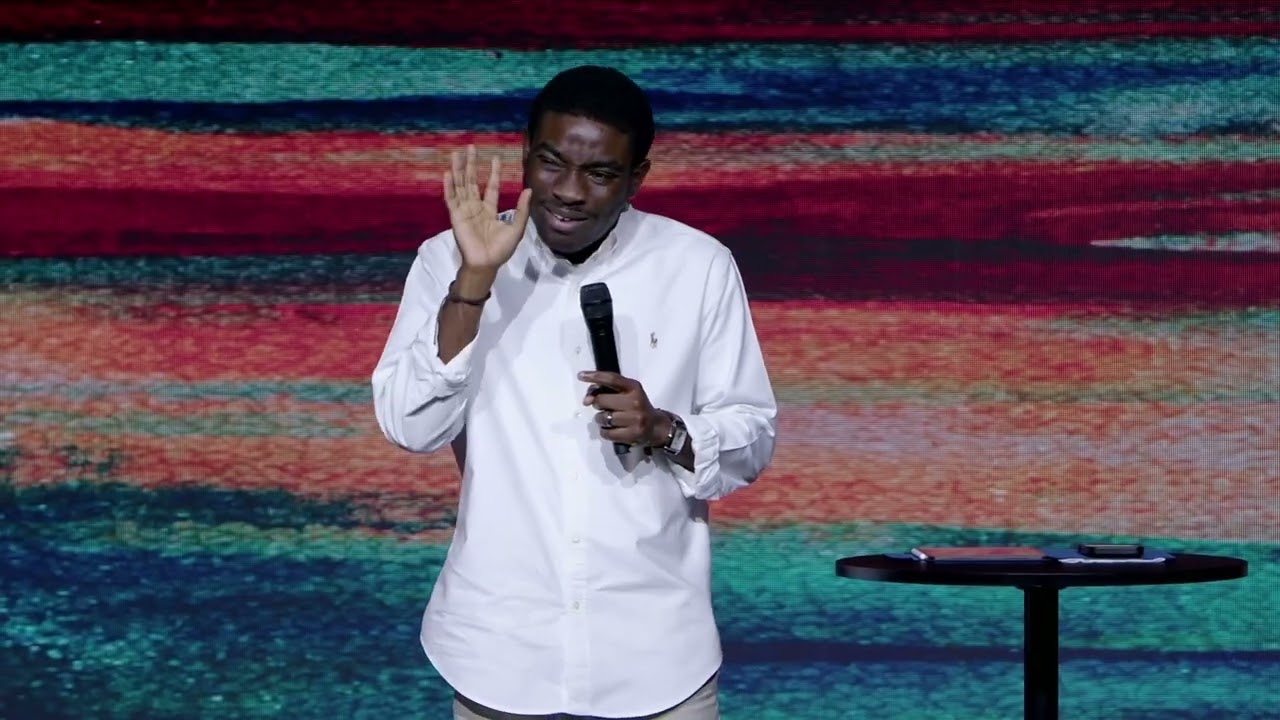
Pastor Dolapo Lawal
Enjoying this sermon? Browse more messages by Pastor Dolapo Lawal on Fasting at ReadSermons.
Two Extremes to Avoid
The first extreme is legalism, treating fasting as a transaction that obligates God to act, rather than a spiritual practice that positions us to receive by grace. Hunger is not currency you pay to God. There are situations, needing rent money for example, where the real manifestation of trusting God as father is resisting the urge to fast at all, since an earthly father does not need to be starved into providing for his own child. I once entered a week-long dry fast chasing a sense of spiritual power after hearing someone preach about it, and by the third day I was hallucinating that running water was speaking to me, and by the fourth day I genuinely feared I might not survive it and had to call my mother to pull me out. The problem wasn't the discipline itself; it was that I was pursuing it out of covetousness, trying to transact with God, rather than out of obedience to something he had actually led me into. What God rewards is not the act itself but the heart behind it.
Luke 18:10-14 illustrates this contrast directly: two men went to the temple to pray, a Pharisee and a tax collector. The Pharisee thanked God that he was not like other men, listing his fasting and tithing as credentials, essentially believing God owed him something for his religious performance. The tax collector, by contrast, would not even lift his eyes to heaven, beating his chest and asking for mercy as a sinner. Jesus said it was the tax collector, not the Pharisee, who went home justified. A person who feels entitled to blessings never learns real thanksgiving, because they treat every good thing as owed rather than given. True gratitude is understanding you didn't get here by your own effort; that recognition alone sustains lasting worship.
The second extreme is antinomianism, the teaching that the finished work of Christ frees a believer from any ongoing discipline or obligation, so no fasting or discipline is required at all. This controversy took shape historically between Martin Luther and his former student Johann Agricola around 1537 to 1540, with Agricola arguing that God's moral law had no remaining role in guiding a believer's life or convicting of sin. Luther wrote against this teaching, and the later Lutheran Formula of Concord of 1577 formally rejected it, affirming the law's ongoing role in a believer's life; this is the background to the phrase "faith alone, but not a faith that is alone." This is also where the distinction between grace as charis, unmerited favor, and grace as charisma, empowerment to do more, becomes important. 1 Corinthians 15:10 shows Paul saying that by the grace of God he is what he is, and that grace was not received in vain but produced more labor, not less.
In 2 Samuel 23, David, longing for water from the well of Bethlehem, had three of his mighty men break through enemy lines at great risk simply to bring it to him, though he had not asked for it. When David realized what the water had cost, he refused to drink it and poured it out as an offering to God instead, recognizing that this kind of loyalty was owed to God alone. That is the picture of grace-driven devotion: love and gratitude compel action that was never demanded. God's commands function less like arbitrary restriction and more like protective boundaries; his instructions to Samson about avoiding entanglement and preserving his consecration were not meant to withhold pleasure but to guard him from exactly the kind of unraveling that eventually came through Delilah.
The Season of the Mighty Hand
1 Peter 5:6-8 instructs believers to humble themselves under the mighty hand of God so that he may exalt them in due time, casting every care on him because he cares, while remaining sober and watchful because the devil, like a roaring lion, is active in that very season. There is a clear parallel between Israel's story and Christ's: both came out of Egypt, both passed through water as a form of baptism, in 1 Corinthians 10:1-7, and both were then led into the wilderness to be tested by the same essential temptations. Israel failed theirs and wandered forty years instead of completing a forty-day journey; Jesus passed his, and afterward angels came and ministered to him.
Before a season of exaltation, the mighty hand of God rests on a person first, and that pressure typically produces restlessness rather than comfort, a discontent that has nothing to do with boredom. In that season, someone may find themselves distracting their emotions through food at unusual hours, changing shows repeatedly because nothing seems to satisfy, calling friends who don't pick up, without realizing that this same restlessness is God's way of drawing them toward him rather than away. This is also a season of tests you may not know you're taking: when the prophet told King Joash to strike the ground with arrows as a sign of victory over his enemies, Joash struck only three times and stopped, and the prophet was angry with him, telling him he should have struck five or six times to have utterly destroyed the enemy. Many people fail similarly quiet tests without realizing they were even being tested.
The devil's first temptation to Jesus was to turn stone into bread, since he was hungry; Jesus refused, insisting that a person lives by every word that comes from the mouth of God, not by bread alone, echoing Deuteronomy 8:2-3. Even though he had the power to turn water to wine and could presumably have provided for himself, the point was that being able to afford something does not mean it is the right time to take it. Food undid humanity in the garden and undid Israel repeatedly in the wilderness, where the people complained for cucumbers, garlic, and meat instead of trusting the daily provision of manna, one day's portion at a time; the manna itself was effectively a divinely imposed fasting diet meant to build their sensitivity to God. When they instead treated three square meals a day as an entitlement rather than a fasted, disciplined life, they lost the very sensitivity fasting was meant to produce and settled into unbelief.
A Practical Word
A healthy Christian life includes fasting at least once a week, using that day to consecrate yourself, filling the space with scripture and worship instead of ordinary distraction, so that when someone eventually prophesies over you, it confirms what you already sensed rather than announcing something entirely new. When you feel that unexplainable discontent, the wise response is to pick a fast rather than seek out more advice or opinions, since too many voices can drown out the very leading you're trying to hear. Learn to wait for the word to come to you rather than manufacturing your own solution out of impatience. Once Isaac, the promise, is conceived, opposition follows, but the danger is creating your own Ishmael, a premature substitute for the promise, simply because you were unwilling to wait. Moses spent forty days on the mountain, and before he came down, the people who couldn't wait had already built a golden calf. Whatever you build to fill an uncomfortable waiting period will not be the promise itself, and if a life defined by eating, drinking, and being entertained is what satisfies you, that is itself a sign you have not yet entered what God actually has for you.
Father, in the name of Jesus, I thank you for everyone here. By the word you have shared with us today, strengthen us and energize us to wait on you. Even as we prepare for the fast ahead, strengthen us in the mighty name of Jesus.
Pastor Dolapo Lawal
Enjoyed this sermon? Browse more messages by Pastor Dolapo Lawal on ReadSermons.
Comments
0 comments
No comments yet. Be the first to share.
Stay updated with Readsermons
To be notified on every sermon release, join the group that suits you best:
For nuggets & Sharable snippets follow us.
headphones Media & Resources
Listen to Sermon
Download initiated! Follow us to be the first to get new sermons by Pastor Dolapo Lawal.
What Happens When You Fast?
Pastor Dolapo Lawal • 27MB
Download initiated! Follow us to be the first to get new sermons by Pastor Dolapo Lawal.
Your download
is starting! 🎉
Connect with us directly for more powerful teachings.
What Happens When You Fast?
00:00:00 / 00:00:00