

Should We Speak In Tongues In Church? by Pastor Dolapo Lawal: MP3 Download & Sermon Notes
Paul Regulates Tongues, Not Forbids
lightbulb Message Summary - Key Nuggets
- A church functionally requires a designated gathering, believers, and a called leader.
- Every recorded instance of tongues in Acts happened under a leader's ministry.
- Private tongues edify the individual; corporate tongues need interpretation to edify the church.
- Genuine moves of the Spirit still leave room for a person's own will.
Notes/Excerpt
These notes were taken while listening and may contain some errors. Please tap any sentence twice to suggest corrections.
By holding or selecting a paragraph, you can easily share snippets to friends or on your whatsapp status directly
I want to stick to the Bible and go from scripture to scripture, so it will look like I'm reading at you, but that keeps the thoughts chronological and lets you take clear notes. 2 Timothy 2:2 speaks of things Timothy has heard among many witnesses. Those witnesses are not people but scriptures. Hebrews 12:1 says we are compassed about with a great cloud of witnesses, and the context for that comes from Hebrews 11, the hall of faith, where he lists Gideon, Barak, Samson, and others who were tortured, mocked, scourged, chained and imprisoned for their faith. Those witnesses are found in the scriptures, so when the writer of Hebrews and of Timothy speaks of witnesses, he means scripture itself, committed to faithful men so that they can teach others also. A faithful man comes to church to learn what he will teach, and that means the teaching he receives must be systematic, chronological and progressive, and he must not add to it, only present it faithfully.
If you find us speaking in tongues in church, I want you to understand why we do it, and I will also show how the Bible addresses unbelievers. To make the argument for speaking in tongues in church, we need to understand three things.
What Is a Church? Acts 19:39, Acts 7:38, Matthew 16:18
Church is not a building, but it is also not merely a person. The word is ecclesia, meaning called-out people or called-out ones. One believer is a member of a church; he is not the church himself, in the same way one soldier is not an army. It is also said that anywhere believers gather to meet is church, and that can be true, but functionally there are parameters for that to be valid. Not anywhere lawyers happen to be is automatically a court, and not any private party with a hundred senators present is automatically Congress. The etymology of ecclesia means people called out of their homes as representatives to a distinct, designated place to carry out legislation, called-out representatives who leave their homes for a designated place to legislate. In Acts 19:39, the phrase rendered "lawful assembly" is the word ecclesia, referring to an actual designated place in the city where grievances were brought. So a church must be a designated place for called-out people to meet. Acts 7:38 refers to the children of Israel in the wilderness as the church, gathered at the mount with Moses, showing that a called-out one who gathers the called-out people is also required. Before Jesus built his church through his death, burial and resurrection, the first thing he did was appoint its leader, Peter, in Matthew 16:18. So a church must have a designated place, a gathering of believers, and a pastor; without these it is not a congregation but a crowd. A judge does not become a judge merely by declaring himself one on the street; his authority is tied to a designated place where he exercises his function, though that place could be an office rather than a courtroom. In the same way, your house can transpose into a church if a pastor comes there to lead it, but simply watching a sermon on television at home is not attending church.
Every Recorded Instance of Tongues in Acts Happened Under a Leader's Ministry Acts 2:1, Acts 10:44-46, Acts 19:6
Given that definition, did the early church speak in tongues in church, or only privately at home? Every recorded instance of tongues in the book of Acts happened in a convened gathering under leadership, which by our own definition is church. In Acts 2:1, the hundred and twenty were gathered in one accord in one place, with the apostles present; that room was church in session. In Acts 10:44-46, though the gathering was in Cornelius's house, Peter, the called one, was present and ministering the word, and it was while he was speaking that the Holy Spirit fell on them and they spoke in tongues. In Acts 19:6, when Paul laid hands on the believers at Ephesus, they spoke with tongues and prophesied, again with an apostle present.
In 1 Corinthians 14, Paul makes two distinctions for the demonstration of tongues: private usage and church usage. 1 Corinthians 14:4 says he who speaks in a tongue edifies himself, but he who prophesies edifies the church. To edify means to build up, brick upon brick. 1 Corinthians 14:18-19 shows Paul saying he speaks in tongues more than everyone, yet in the church he would rather speak five words with understanding than ten thousand words in a tongue. This shows his frequent tongues-speaking happened privately, not in church. Now, 1 Corinthians 12 makes clear that not everyone in the church is given the same manifestation: to one is given tongues, to another healing, to another interpretation, and Ephesians 1:3 shows every believer has already been blessed with every spiritual blessing, so choosing not to operate in a gift is a matter of use, not of lack.
1 Corinthians 14:39 addresses the church corporately about not forbidding tongues, a choice of wording rather than an instruction to stop those already speaking. So Paul was not banning tongues in church but regulating it, as seen in 1 Corinthians 14:27-28: if anyone speaks in a tongue, let it be two or at most three, each in turn, and one must interpret; if there is no interpreter, the speaker should keep silent in the church and speak to himself and to God. This is about orderly usage. 1 Corinthians 14:40 says let all things be done decently and in order. When addressing the whole church, tongues must come with interpretation.
Even within corporate exercise of the gift, the spirit of a prophet is subject to the prophet, meaning a person can stop when the leader calls for order. God always leaves room for a person's own will, because he judges the will; a person's spirit is never so overtaken that they lose responsibility for it, unlike counterfeit or demonic manifestations where the person's will is genuinely overridden. This ability to start and stop is itself what is described as quenching, or not quenching, the spirit in 1 Thessalonians 5.
Tongues Are a Sign to Unbelievers 1 Corinthians 14:21-25, Isaiah 28:11, Deuteronomy 28:49
Paul quotes Isaiah 28:11 about stammering lips and another tongue, which reaches back to a warning in Deuteronomy 28:49 that God would bring a foreign nation whose language Israel would not understand as a form of judgment. When Israel was in Egypt and later in Babylon, hearing a language they could not understand was itself a sign that God was judging them for sin. So in the Old Testament, incomprehensible speech was a sign of judgment, not blessing. If someone is spoken to in a language they cannot understand, they may be in real confusion or even danger without realizing it, because not understanding a warning does not make the warning less real. So Paul reasons that if a whole church speaks in tongues and unbelievers or the uninformed come in, they would say the believers are out of their minds, mistaking a gift of blessing for a sign of coming judgment. That is why, when tongues occurred at Pentecost, God made sure there was an interpretation available, so those hearing understood the wonderful works of God rather than concluding they were being judged. This is also why interpretation matters when tongues are exercised corporately: so unbelievers are not given the wrong sign.
The Setting of Acts 2
The upper room mentioned in Acts 1:13 was a private house, most likely Mark's mother's house, but Acts 2:1 describes the disciples gathered together in one place when the sound from heaven filled the house where they were sitting. Comparing this with Acts 15:2, where believers gathered together in Solomon's porch, and with the consistent use of the word "house" for the temple in John 2:16 and Acts 7:47, it becomes clear that the house of Acts 2 refers to the temple, not a private residence. This also explains how Peter had a crowd of three thousand to preach to immediately afterward. You would not find that many people gathered in someone's upper room. So the first outpouring of the Spirit and the first tongues took place in the temple, in a corporate gathering, not privately at home. The point is not that tongues cannot happen at home, but that the best place to begin exercising the gift is in the gathered church, since that is where it was first poured out.
How to Receive and Grow in the Gift
The gift of tongues is received, not earned. It did not take Cornelius's household any labor before they began speaking in tongues the moment they received the Holy Spirit in Acts 10. The fact that believers do not have to learn a language to speak in tongues shows that the gift is freely given, not acquired by study. Luke 11:9-13 teaches that everyone who asks receives, everyone who seeks finds, and everyone who knocks will have the door opened, and that an earthly father who knows how to give good gifts to his children shows how much more the heavenly Father will give the Holy Spirit to those who ask. The likelihood of asking for a spiritual gift and being refused is effectively zero.
Be bold to speak. Acts 2:4 shows the disciples beginning to speak with other tongues, and the Spirit giving them the utterance as they spoke. They began to speak, and then the utterance was given, not the other way around. Many people never speak because they are waiting to feel overwhelmed first, expecting a particular atmosphere or a particular kind of encounter before they will open their mouths, when the pattern in scripture is simply to start.
Tongues build up the one who speaks in them. According to Romans 8:26, we do not know what we ought to pray for as we ought, but the Spirit helps our weaknesses; someone can appear composed on the outside while something is wrong that only becomes clear as they pray in the Spirit and receive discernment they would not otherwise have had. A believer can be praying for one thing while the Spirit is actually addressing the real underlying need. Tongues are also described as producing what looks like coincidence in life: connections, opportunities, and answers that arrive because of unseen intercession.
1 Corinthians 14:2 says he who speaks in a tongue speaks not to men but to God, since no one understands him, but in the spirit he speaks mysteries. This is precisely why tongues qualify as tongues: the speaker's own understanding is unfruitful, and what is spoken must be decoded by the separate gift of interpretation, not worked out by the mind. Tongues open the doorway for other gifts to operate, which is why it is resisted, and fear of speaking is not from God. To grow in exercising any spiritual gift takes practice, since spiritual things, like the body, are strengthened by use, not merely by waiting for a single dramatic encounter.
Out of my belly shall flow rivers, rivers of living water, in Jesus' name. Every fear that has held back anyone from speaking in tongues, let it break now. Open your mouth and let the Spirit give utterance.
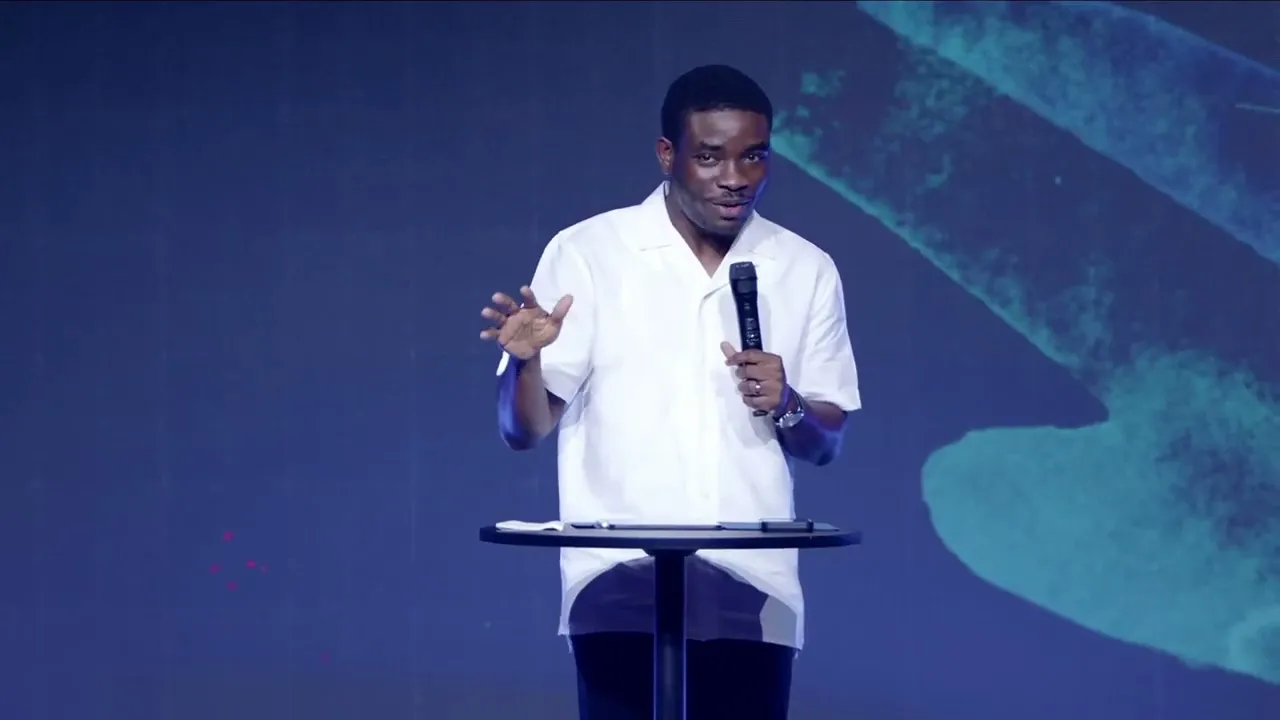
Pastor Dolapo Lawal
Enjoyed this sermon? Browse more messages by Pastor Dolapo Lawal on ReadSermons.
Comments
0 comments
No comments yet. Be the first to share.
Stay updated with Readsermons
To be notified on every sermon release, join the group that suits you best:
For nuggets & Sharable snippets follow us.
headphones Media & Resources
Listen to Sermon
Download initiated! Follow us to be the first to get new sermons by Pastor Dolapo Lawal.
Should We Speak In Tongues In Church?
Pastor Dolapo Lawal • 33MB
Download initiated! Follow us to be the first to get new sermons by Pastor Dolapo Lawal.
Your download
is starting! 🎉
Connect with us directly for more powerful teachings.
Should We Speak In Tongues In Church?
00:00:00 / 00:00:00